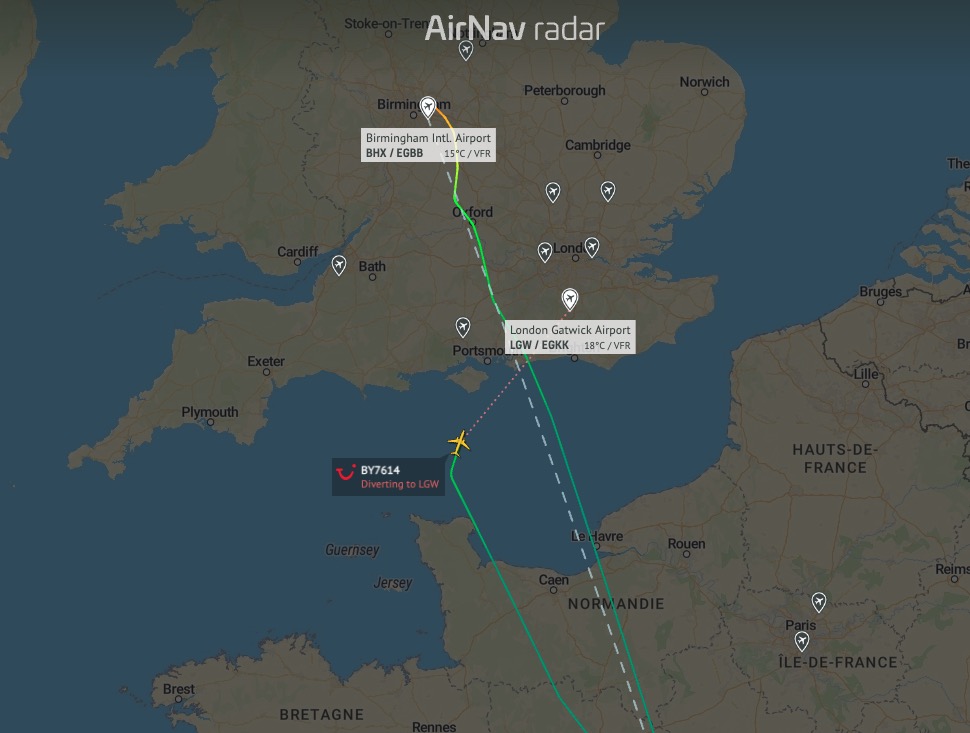
It's a stark reminder, isn't it? That even with all our technological marvels, the skies can still present unexpected challenges. This morning, TUI flight BY7614, a Boeing 737 MAX 8, experienced a mid-air emergency over France, forcing a dramatic diversion to London Gatwick. Personally, I think these incidents, while concerning, highlight the incredible skill and preparedness of our aviation industry.
The Sudden U-Turn: More Than Just a Detour
What makes this particular event so striking is the abruptness of the change in course. At a cruising altitude of 37,000 feet, the flight, en route to Menorca, suddenly executed a sharp turn back towards the UK. From my perspective, this isn't just a minor hiccup; it's a clear signal that something significant was amiss. The pilots' decision to abandon their planned route and head for a priority landing speaks volumes about the severity of the situation they assessed.
Squawking 7700: A Universal Cry for Help
When the flight crew broadcast the Squawk 7700 code, it's like a universal alarm bell for air traffic control. This isn't a code used lightly; it signifies a general emergency. What many people don't realize is the immediate and coordinated response this single code triggers. Controllers clear airspace, ground crews are mobilized, and every available resource is focused on ensuring a safe landing. It’s a testament to the robust safety protocols that are in place, designed precisely for these unforeseen circumstances.
The Tyre Burst Revelation: A Simpler, Yet Serious, Issue
Initially, the exact nature of the emergency remained unconfirmed, with speculation ranging from mechanical failures to passenger medical issues. However, the update revealing a tyre burst offers a more specific, yet still critical, reason for the diversion. In my opinion, while a tyre burst might sound less dramatic than other potential emergencies, it presents a unique set of challenges for landing, especially at high speeds. The aircraft's stability, braking capabilities, and the risk of further damage are all immediate concerns. The fact that the aircraft landed safely and taxied to a remote area suggests a well-managed emergency response.
Reflection on Aviation Safety
This incident, for me, underscores the constant vigilance required in aviation. While the Boeing 737 MAX has faced scrutiny in the past, this event, based on the information available, appears to be a testament to the aircraft's and the crew's ability to handle an unexpected problem. What this really suggests is that even with advanced aircraft, the human element – the pilot's judgment and the ground crew's efficiency – remains paramount. It's a fascinating interplay of technology and human expertise that keeps us safe when we fly. It also makes me wonder about the psychological impact on the passengers; one moment you're heading for a holiday, the next you're part of an emergency landing. A truly unforgettable start to a vacation, I'm sure.